
Habitat for Humanity Tanzania partners with Bahi District Council to advance local sanitation policy
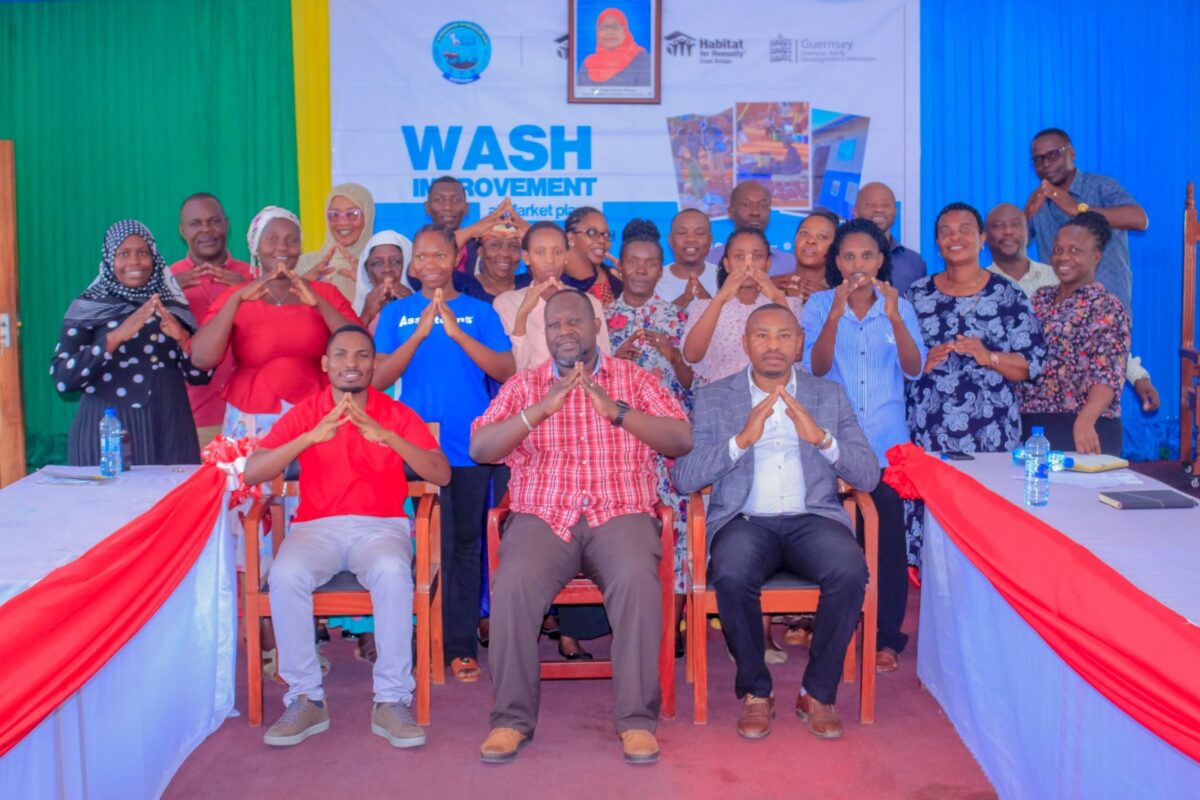
Habitat for Humanity Tanzania and Bahi District Council have jointly developed a draft by-law to govern the community management of public toilet facilities at marketplaces, establishing a formal framework for how these services will be operated, maintained, and sustained over time.
In Bahi District, Tanzania, Habitat for Humanity Tanzania has constructed two modern, gender-inclusive, and climate-resilient public WASH facilities; one at Kigwe marketplace and another at Bahi Sokoni. Together, they serve more than 4,000 daily users, including lactating mothers and people with disabilities.
Central to the project’s sustainability is a pay-per-use fee system jointly managed by local Village Savings and Loan Associations (VSLAs) and the Bahi District Council. Revenue generated covers facility maintenance, and a portion is reinvested into a community-based housing fund that provides micro-loans for vulnerable families to upgrade their homes.
In April 2026, representatives from across Bahi District came together for a structured two-day working session to develop the draft by-law. Those present included:
- Five Village Savings and Loan Associations (VSLAs); two from Bahi ward and three from Kigwe ward, alongside leadership from their respective communities
- The Bahi District Council Management Team, with representatives from agriculture and livestock, community development, environment, finance, legal, and monitoring departments
- Habitat for Humanity Tanzania, represented by Program Director John Massenza
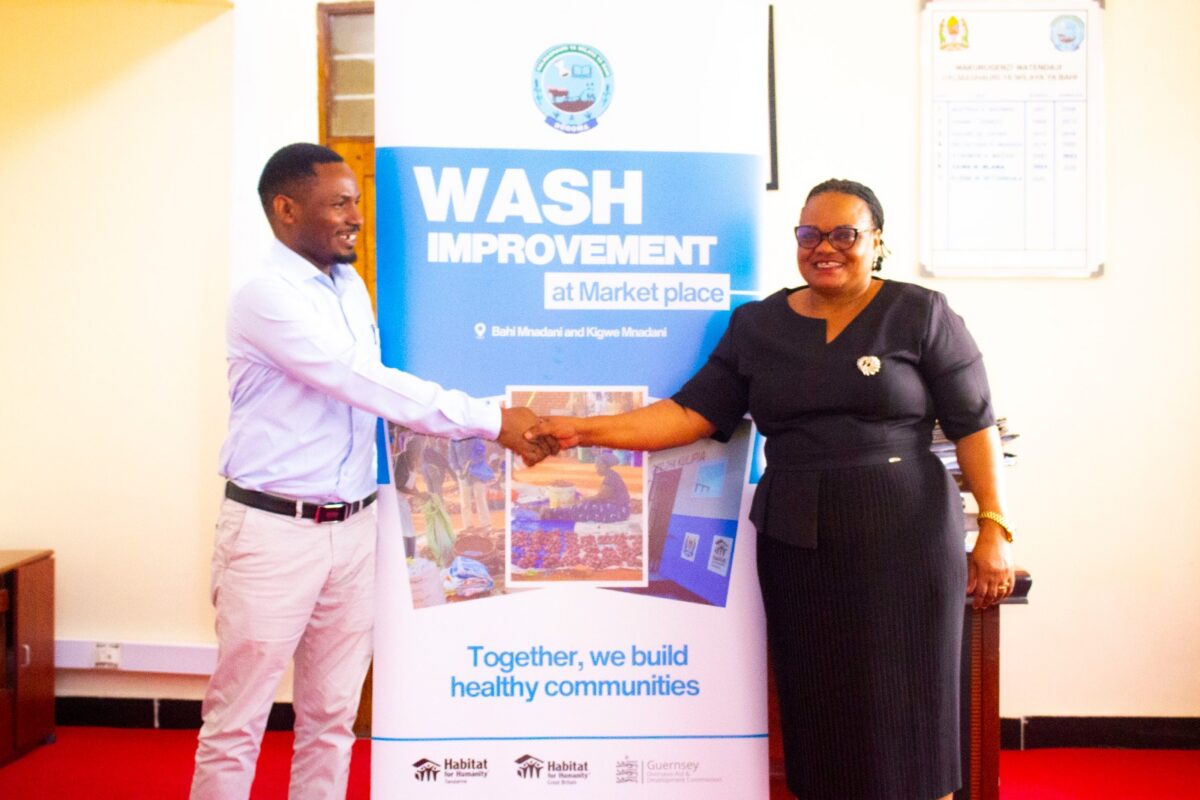
The draft by-law establishes a formal framework for how the marketplace WASH facilities will be operated, maintained, and sustained. It covers five key areas:
- Revenue collection: How fees from toilet use are collected from daily users at both marketplaces
- Revenue sharing: A defined arrangement between the Bahi District Council and the community managing groups
- Sanitation and hygiene protocols: Standards for how the facilities are kept safe, clean, and functional for all users
- Quarterly monitoring: A regular review mechanism to track performance and address issues as they arise
- Three-year management agreement: A time-bound agreement with built-in review mechanisms to adapt the framework over time
The groups involved are the first in Tanzania to collaborate directly with a District Council to run a development project of this kind; a model with the potential to inform community-led sanitation governance well beyond Bahi District.
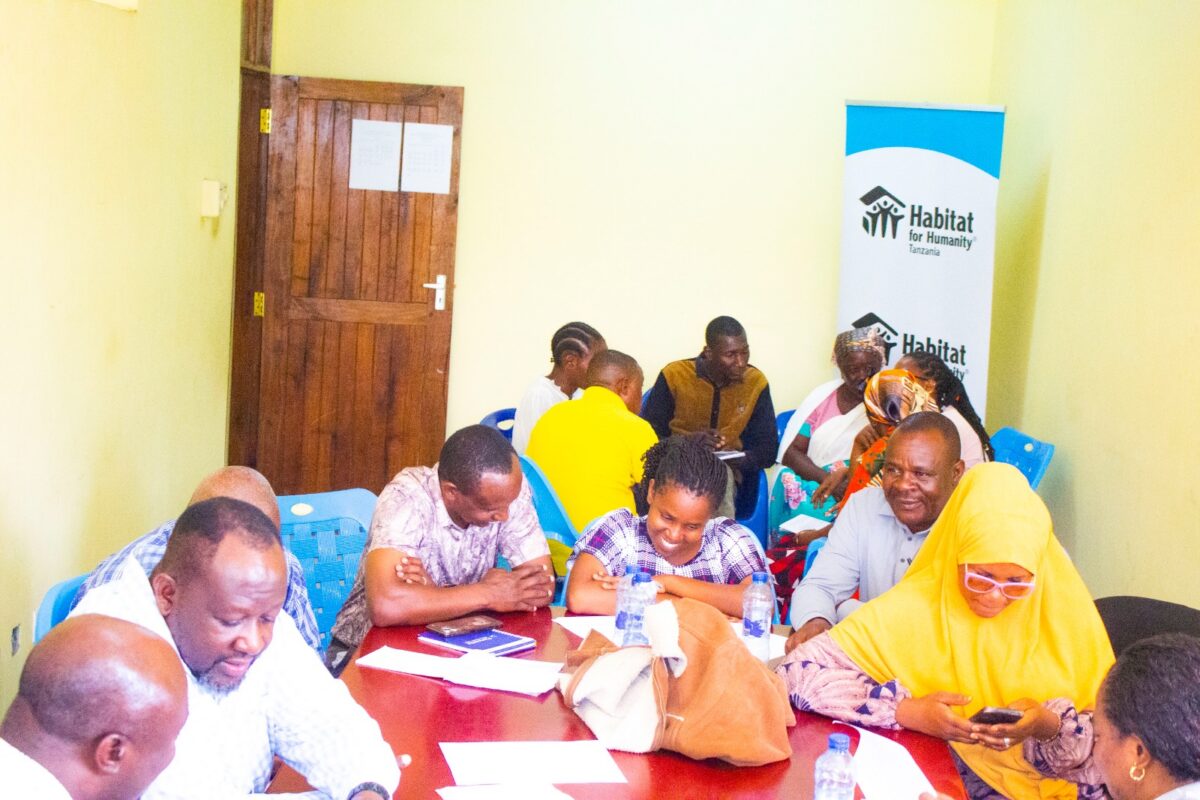
What makes this initiative significant is not just the by-law itself, but what it represents: a model in which community groups are formally recognised as co-managers of public health infrastructure, and the integration of WASH business for housing improvement in direct partnership with local government.
The revenue generated from the pay-per-use system not only covers facility maintenance but is also reinvested into a community-based housing fund, providing microloans that empower vulnerable families to upgrade their living conditions and ultimately create a self-sustaining cycle of improved hygiene and housing dignity.
This initiative is part of Habitat Tanzania’s WASH Improvement at Market Places grant, an intervention funded by the Guernsey Overseas Aid & Development Commission (GOAC), designed to improve community health and housing resilience in Bahi District.